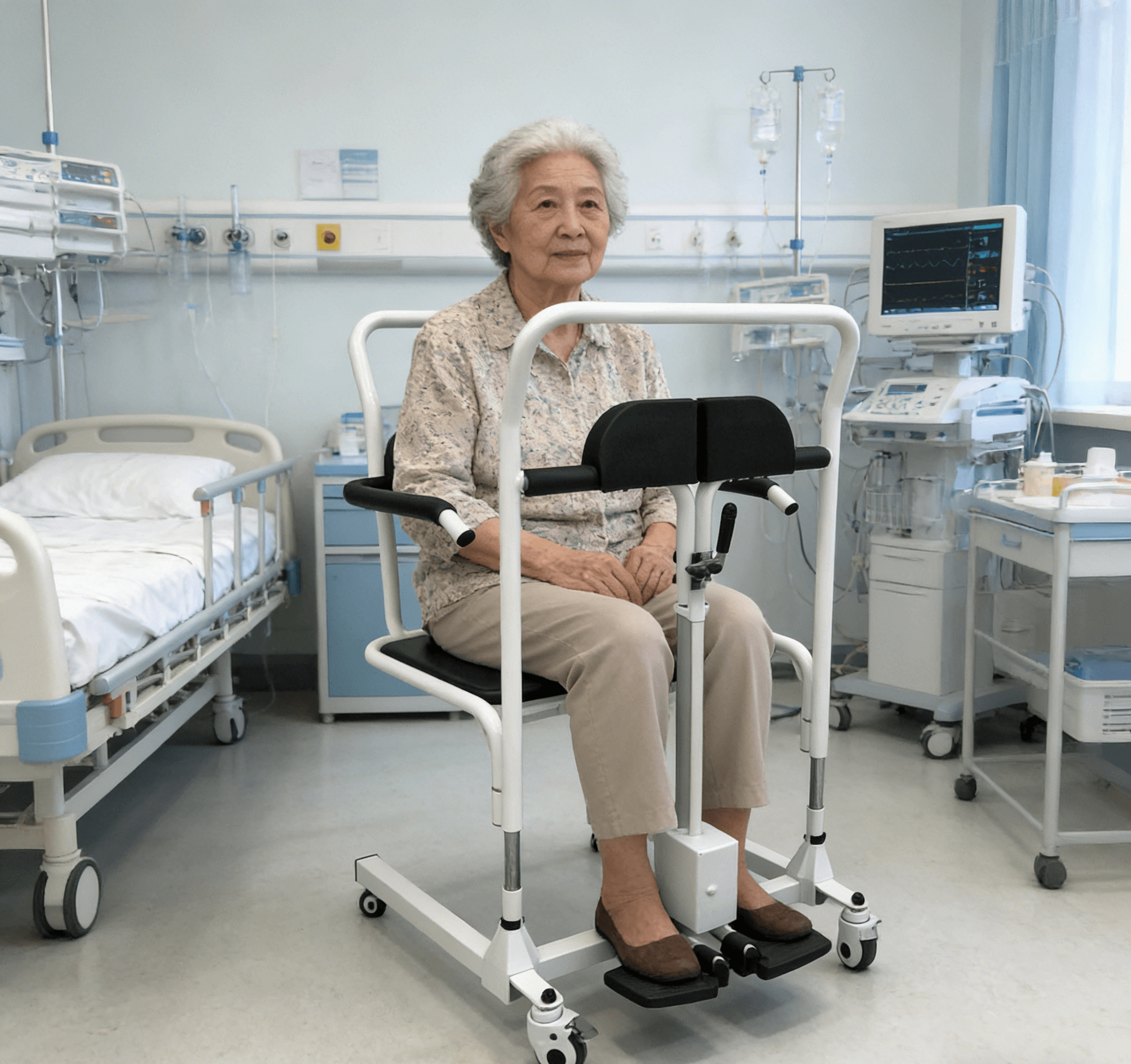
Category: Power Wheelchair
Posted by 2025-12-15 10:12
hoyer lift bed
Compatibility Between Hoyer Lifts and Beds: An Overlooked Yet Critical Care Detail
Many families discover only after purchasing a Hoyer Lift that, despite the device’s quality, it cannot slide smoothly under the bed or the boom fails to align with the patient. The issue often lies not with the lift itself, but with incompatibility between the bed and the lift.
In fact, 70% of the efficiency and safety of bedside transfers using a Hoyer Lift depend on the bed’s design. An unsuitable bed can render even the most advanced lift ineffective, while a compatible bed can cut caregiving effort in half.
This article will detail the core requirements a bed must meet for Hoyer Lifts, common obstacles, and practical solutions.
I. Why Is Bed Structure So Critical?
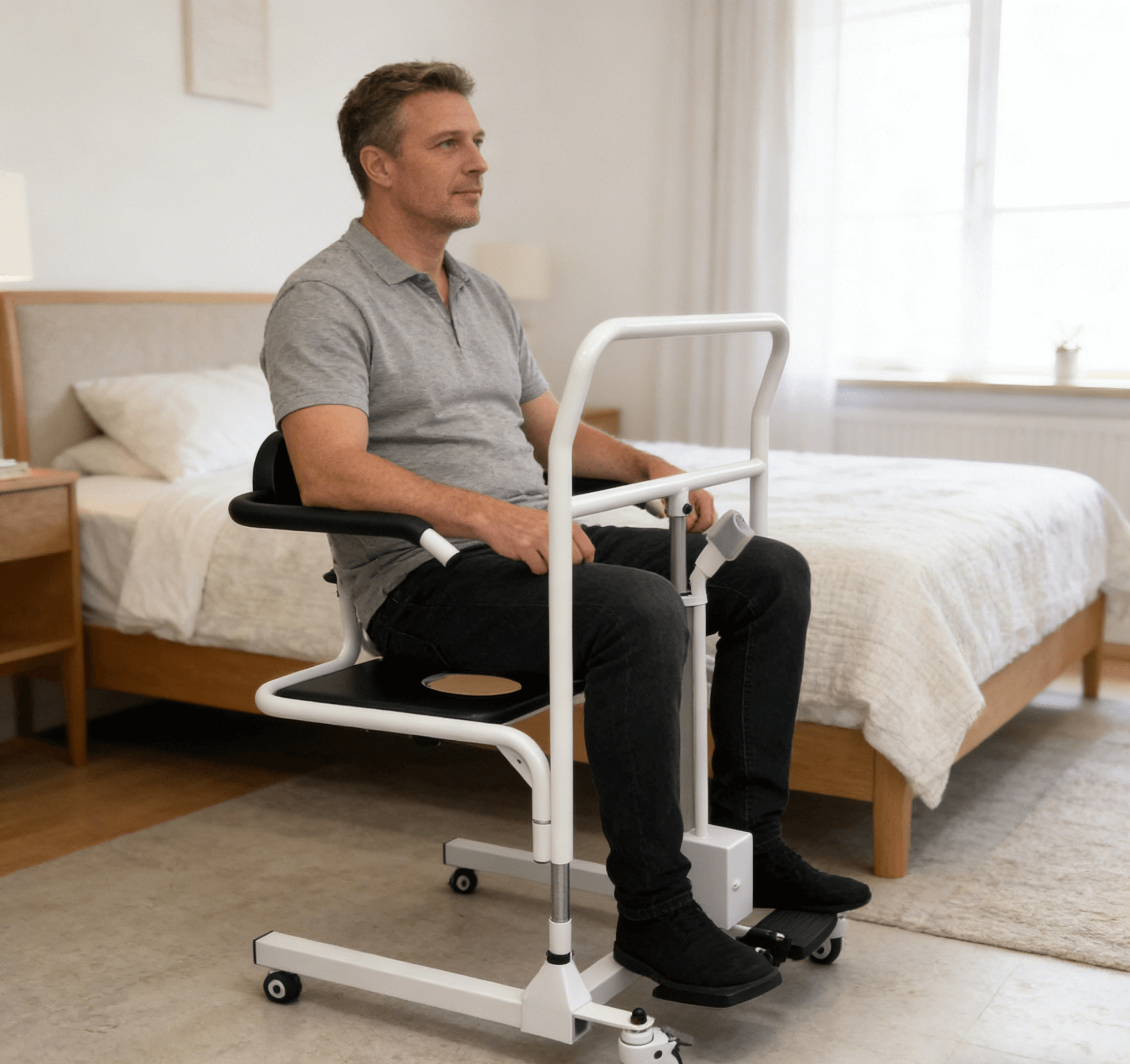
Hoyer Lifts operate by sliding their base under the bed and using the boom for vertical lifting during transfers. This process imposes three non-negotiable requirements on the bed:
Sufficient ground clearance: The lift’s base needs to slide underneath;
No obstructive under-bed crossbars: Support structures must not block the base from expanding;
Appropriate bed height: To facilitate easy sling insertion and stable lowering.
Failing to meet any of these requirements can lead to difficulties in operation at best, or equipment tipping and patient falls at worst.
II. Five Key Features of an Ideal Care Bed
1. Ground Clearance ≥ 10 cm
Standard medical care beds typically have a ground clearance of 10–15 cm, which is perfectly compatible with most Hoyer Lifts (e.g., the Hoyer Advance 340 has a base height of approximately 8–9 cm).
Mattress placed directly on the floor? → Incompatible with Hoyer Lifts.
Raising the bed with bed risers? → May compromise stability; not recommended.
2. Open-Frame Underbed Design
The bed’s underframe should be a "U-shaped" or "H-shaped" metal structure, with no crossbars, drawers, or storage boxes in the middle.Common obstacles include:
Solid wood beds with crossbars;
Storage beds with bottom panels;
Foldable beds with crisscross supports.
✅ Simple test: Shine a flashlight from the side of the bed. If light passes through the entire underbed area, the bed is generally compatible.
3. Removable or Foldable Side Rails
One side rail must be temporarily removed during transfers; otherwise, the sling cannot be inserted.
Fixed high side rails block the boom’s path;
Medical-grade rails with "quick-release" functionality are recommended.
4. Adjustable Bed Height (Preferred)
Electric care beds can lower the mattress to a minimum height (approximately 40 cm), making it easier to slide the sling underneath. Raising the bed also allows caregivers to operate while standing, reducing bending strain—this is especially important for patients with complete mobility impairment.
5. Moderate Width
Standard single care beds are approximately 90–100 cm wide. Overly wide beds (e.g., double beds) may prevent the lift’s boom from reaching the center of the patient, requiring a lift with an extended boom.
III. Common Incompatibility Scenarios and Solutions
Scenario 1: Household Solid Wood Bed with Underbed Crossbars
❌ Problem: The lift’s base gets stuck against the crossbars and cannot reach the correct position.✅ Solutions:
Replace the bed with a medical care bed (most thorough solution);
Temporarily use a transfer slide board + gait belt to assist the patient in sitting up at the bedside, then switch to the Hoyer Lift for further transfer.
Scenario 2: Low Bed Placed Directly on the Floor
❌ Problem: The lift’s base cannot slide underneath.✅ Solutions:
Use a low-profile Hoyer Lift (e.g., models with a "scissor-leg" design);
Install specialized height-increasing bed risers under the bed legs (ensure stability and anti-slip properties).
Scenario 3: Double Bed in a Crowded Space
❌ Problem: The lift cannot approach the side of the bed where the patient lies.✅ Solutions:
Position the patient on the side of the bed closest to the aisle;
Choose a Hoyer Lift with a narrow base and extended boom;
Consider a ceiling track system (eliminates ground space restrictions entirely).
IV. How to Evaluate Bed-Lift Compatibility When Buying a New Care Bed
When purchasing a care bed, always confirm the following parameters:
Minimum ground clearance: ≥ 10 cm;
Underframe structure diagram: Request this from the seller to confirm there are no central crossbars;
Side rail type: Can they be removed with one hand?
Minimum mattress height: Is it ≤ 45 cm?
Hoyer Lift compatibility: Some brands explicitly label beds as "Hoyer Compatible."